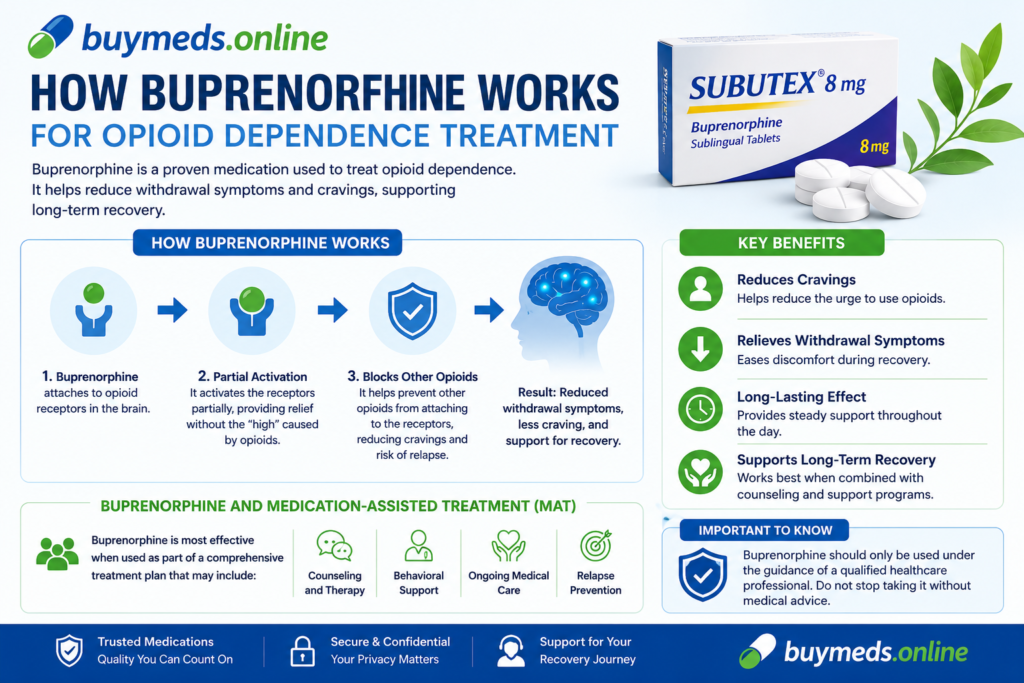
How Buprenorphine Works for Opioid Dependence Treatment
Introduction
Opioid dependence remains a significant public health challenge worldwide. Fortunately, several evidence-based treatment options are available to help individuals manage withdrawal symptoms and support long-term recovery. One of the most commonly prescribed medications is buprenorphine.
In this guide, we explain how buprenorphine works, its benefits, potential side effects, and why it plays an important role in modern opioid dependence treatment.
What Is Buprenorphine?
It belongs to a class of medicines known as partial opioid agonists.
Unlike full opioid agonists, buprenorphine activates opioid receptors in the brain to a limited extent. As a result, it can help reduce withdrawal symptoms and cravings while lowering certain risks associated with stronger opioids.
How Does Buprenorphine Work?
Buprenorphine works by attaching to opioid receptors in the brain. However, it does not activate these receptors as strongly as full opioids.
Consequently, patients may experience fewer withdrawal symptoms and reduced cravings. In addition, buprenorphine can help stabilize brain chemistry during recovery.
Furthermore, its long-lasting effects allow many patients to maintain consistent treatment schedules under medical supervision.
Key Benefits of Buprenorphine
Buprenorphine offers several important benefits for patients undergoing opioid dependence treatment.
1. Reduces Opioid Cravings
One of the primary advantages of buprenorphine is its ability to reduce cravings. As a result, patients may find it easier to focus on recovery goals.
2. Helps Manage Withdrawal Symptoms
Withdrawal symptoms can be challenging and uncomfortable. Fortunately, buprenorphine helps ease these symptoms, making treatment more manageable.
3. Long-Lasting Effects
Because buprenorphine remains active for an extended period, patients often require less frequent dosing compared to some other medications.
4. Supports Long-Term Recovery
When combined with counseling and behavioral support, buprenorphine can contribute to successful long-term recovery outcomes.
Buprenorphine and Medication-Assisted Treatment (MAT)
Medication-Assisted Treatment, commonly known as MAT, combines medication with counseling and behavioral therapies.
For example, healthcare providers may recommend buprenorphine alongside individual counseling, group therapy, and ongoing medical support.
Who May Benefit from Buprenorphine Treatment?
Buprenorphine may be appropriate for individuals who are seeking treatment for opioid dependence.
Every patient’s medical history and treatment needs are unique.
Therefore, personalized medical guidance is essential.
Possible Side Effects
Like all medications, buprenorphine may cause side effects.
Common side effects include:
- Headache
- Nausea
- Constipation
- Dizziness
- Sweating
- Sleep disturbances
Although many side effects are mild, patients should discuss any persistent symptoms with their healthcare provider.
Frequently Asked Questions
How long does buprenorphine last?
The duration may vary depending on factors such as dosage, metabolism, and overall health. Nevertheless, buprenorphine is generally considered a long-acting medication.
Does buprenorphine help with cravings?
Yes. Buprenorphine is commonly used to help reduce opioid cravings as part of a medically supervised treatment plan.
Is buprenorphine used alone?
Not always. In many cases, buprenorphine is combined with counseling, behavioral therapies, and other recovery support services.
Conclusion
Overall, buprenorphine plays a vital role in opioid dependence treatment. It helps reduce cravings, manage withdrawal symptoms, and support long-term recovery efforts.
Furthermore, when used as part of a comprehensive treatment program, buprenorphine can help individuals work toward improved health and recovery outcomes. For the best results, patients should always follow the guidance of qualified healthcare professionals.