Concerta for ADHD: Understanding How It Works and What to Expect
Introduction
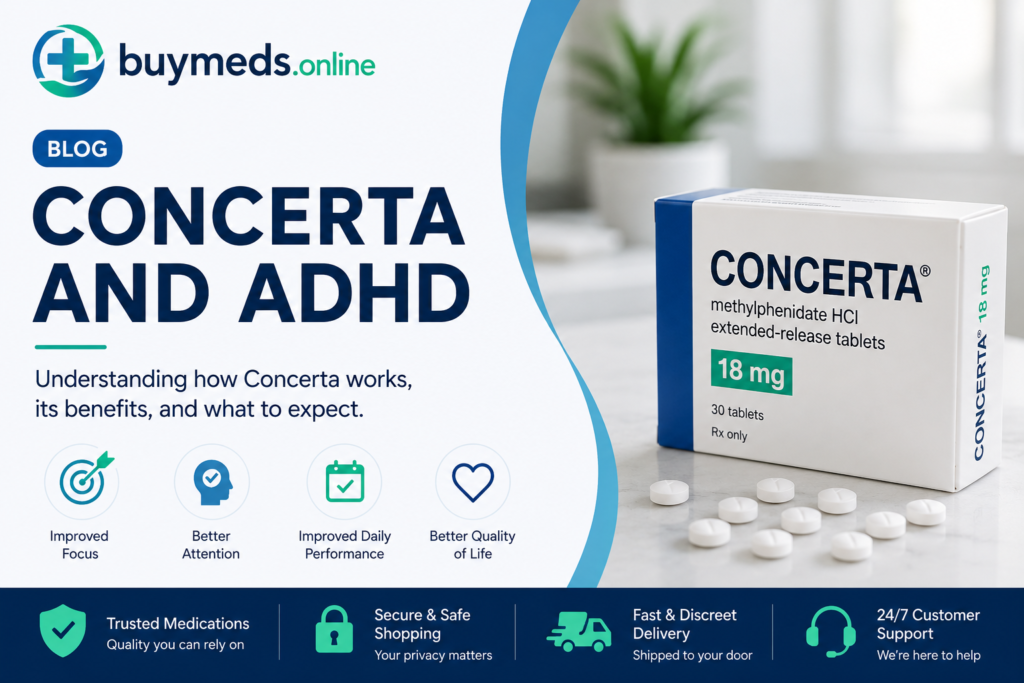
Attention-Deficit/Hyperactivity Disorder (ADHD) affects millions of children, teenagers, and adults worldwide. The condition can make it difficult to focus, stay organized, manage impulses, and complete daily tasks.
Among the treatment options available, Concerta is one of the medications commonly prescribed by healthcare professionals. This article explains how Concerta works, its potential benefits, possible side effects, and what patients should know before beginning treatment.
What Is Concerta?
Concerta is a prescription medication that contains methylphenidate, a stimulant that affects certain chemicals in the brain associated with attention and behavior.
Unlike some short-acting medications, Concerta uses an extended-release system. As a result, the medication is released gradually throughout the day, helping provide consistent symptom management for many individuals.
How Does Concerta Help People with ADHD?
ADHD can affect concentration, organization, impulse control, and time management.
Concerta works by increasing the activity of specific neurotransmitters in the brain. Consequently, many patients experience improved attention, better focus, and greater control over impulsive behaviors.
Furthermore, treatment may help individuals perform more effectively at school, work, or during everyday activities.
Potential Benefits of Concerta
Improved Attention and Focus
One of the primary reasons healthcare providers prescribe Concerta is its ability to help improve concentration.
For many individuals, staying focused on tasks becomes easier when symptoms are properly managed.
Better Task Completion
In addition, some patients find it easier to organize responsibilities and complete projects from start to finish.
Reduced Impulsivity
Many people with ADHD struggle with acting without thinking. Therefore, improved impulse control can be an important benefit of treatment.
Long-Lasting Effects
Because Concerta is an extended-release medication, its effects may last throughout much of the day. As a result, fewer doses may be needed compared to certain short-acting alternatives.
Who May Be Prescribed Concerta?
Healthcare professionals may prescribe Concerta for children, adolescents, or adults diagnosed with ADHD.
However, treatment decisions depend on individual medical history, symptom severity, and overall health. Therefore, a qualified healthcare provider should always determine the most appropriate treatment plan.
Possible Side Effects
Like all medications, Concerta may cause side effects in some individuals.
Common side effects may include:
- Decreased appetite
- Headache
- Difficulty sleeping
- Dry mouth
- Nervousness
- Stomach discomfort
Although many side effects are mild, patients should contact their healthcare provider if symptoms become severe or persistent.
Tips for Managing ADHD Successfully
While medication can be helpful, many people benefit from a comprehensive approach to ADHD management.
For example:
- Maintain a consistent daily routine
- Use planners and reminders
- Break large tasks into smaller steps
- Get adequate sleep
- Stay physically active
- Attend regular follow-up appointments
Furthermore, behavioral strategies and educational support may enhance treatment outcomes.
Frequently Asked Questions
How long does Concerta last?
Concerta is designed to release medication gradually throughout the day. However, the exact duration may vary between individuals.
Can adults take Concerta?
Yes. Healthcare providers may prescribe Concerta for adults with ADHD when appropriate.
Is Concerta a cure for ADHD?
No. ADHD is typically managed rather than cured. However, treatment can help many individuals better manage symptoms and improve daily functioning.
Conclusion
Concerta remains an important treatment option for many individuals living with ADHD. By helping improve focus, attention, and impulse control, it can support better performance in daily activities and long-term goals.
Moreover, when combined with healthy habits, educational support, and professional guidance, treatment can play a valuable role in managing ADHD symptoms effectively.