Subutex vs Methadone: Which Treatment Is Right for You?
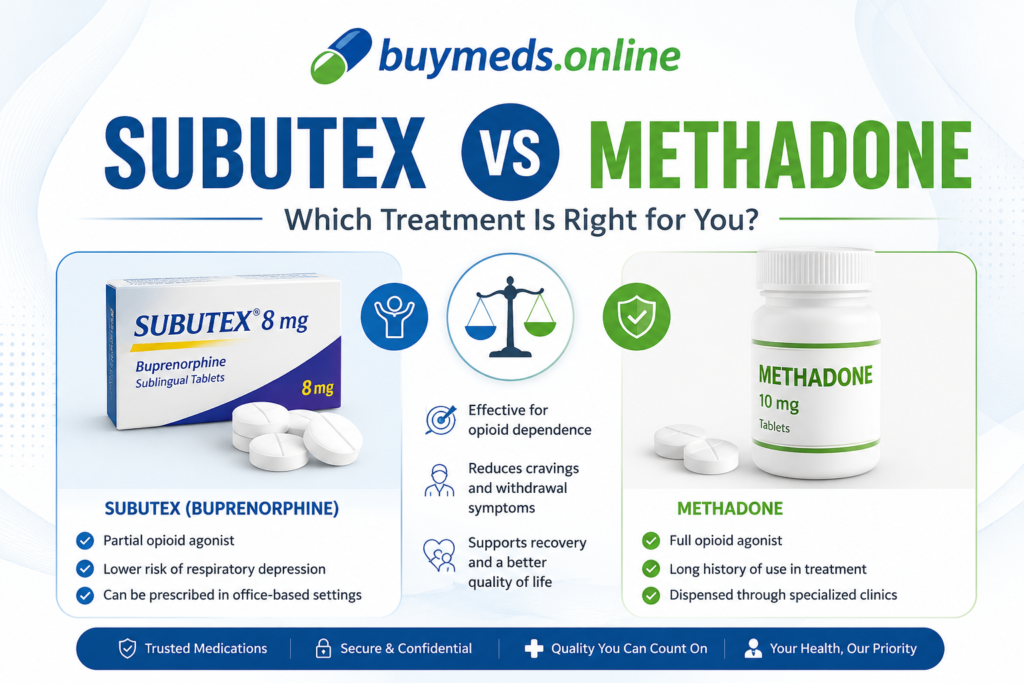
Subutex vs Methadone: Which Treatment Is Right for You?
Opioid addiction treatment has evolved significantly over the years, offering patients several evidence-based options. Two of the most commonly prescribed medications are Subutex (buprenorphine) and methadone. While both medications can help manage opioid dependence, they work differently and may be suitable for different patients.
In this guide, we’ll compare Subutex vs Methadone, including how they work, their benefits, potential side effects, and key considerations.
What Is Subutex?
Subutex is a medication that contains buprenorphine, a partial opioid agonist. It is commonly prescribed as part of a comprehensive treatment plan for opioid dependence.
Subutex works by attaching to opioid receptors in the brain, helping reduce withdrawal symptoms and cravings while producing a lower opioid effect than full opioid agonists.
Benefits of Subutex
- Helps reduce opioid cravings
- Can decrease withdrawal symptoms
- Lower risk of respiratory depression compared to full opioid agonists
- Often prescribed as part of medication-assisted treatment (MAT)
What Is Methadone?
Methadone is a long-acting full opioid agonist used in opioid dependence treatment.
Methadone helps stabilize patients by preventing withdrawal symptoms and reducing cravings. It has been used for decades and remains an important treatment option.
Benefits of Methadone
- Effective for long-term opioid dependence treatment
- Helps reduce cravings and withdrawal symptoms
- Extensive clinical history and research support
- Can be beneficial for individuals with severe opioid dependence
Subutex vs Methadone: Key Differences
| Feature | Subutex | Methadone |
|---|---|---|
| Active ingredient | Buprenorphine | Methadone |
| Medication type | Partial opioid agonist | Full opioid agonist |
| Duration of action | Long-acting | Long-acting |
| Withdrawal symptom control | Effective | Effective |
| Craving reduction | Effective | Effective |
| Prescription requirements | Vary by country | Vary by country |
Potential Side Effects
Common Subutex Side Effects
- Headache
- Nausea
- Constipation
- Sweating
- Dizziness
- Sleep disturbances
Common Methadone Side Effects
- Drowsiness
- Constipation
- Sweating
- Nausea
- Dry mouth
- Fatigue
Patients should discuss any concerns about side effects with their healthcare provider.
Which Treatment Is Right for You?
The choice between Subutex and Methadone depends on many factors, including:
- Medical history
- Severity of opioid dependence
- Previous treatment experiences
- Individual treatment goals
- Healthcare provider recommendations
There is no one-size-fits-all solution. Both medications have helped many individuals manage opioid dependence and support long-term recovery.
Frequently Asked Questions
Is Subutex better than Methadone?
Neither medication is universally better. The most appropriate treatment depends on individual circumstances and should be determined with a qualified healthcare professional.
Can I switch from Methadone to Subutex?
Treatment changes should only be made under medical supervision, as medication transitions require careful planning.
Do both medications reduce cravings?
Yes. Both Subutex and Methadone are commonly used to help reduce opioid cravings and withdrawal symptoms.
Final Thoughts
When comparing Subutex vs Methadone, both medications play important roles in opioid addiction treatment. Understanding their differences can help patients have informed discussions with healthcare providers and identify the treatment approach best suited to their needs.